 Certified Instructor

123456789
Certified Instructor
123456789
Upcoming In-Class Session
18 Oct 2026
Certified Instructor
123456789
Certified Instructor
123456789
Upcoming In-Class Session
18 Oct 2026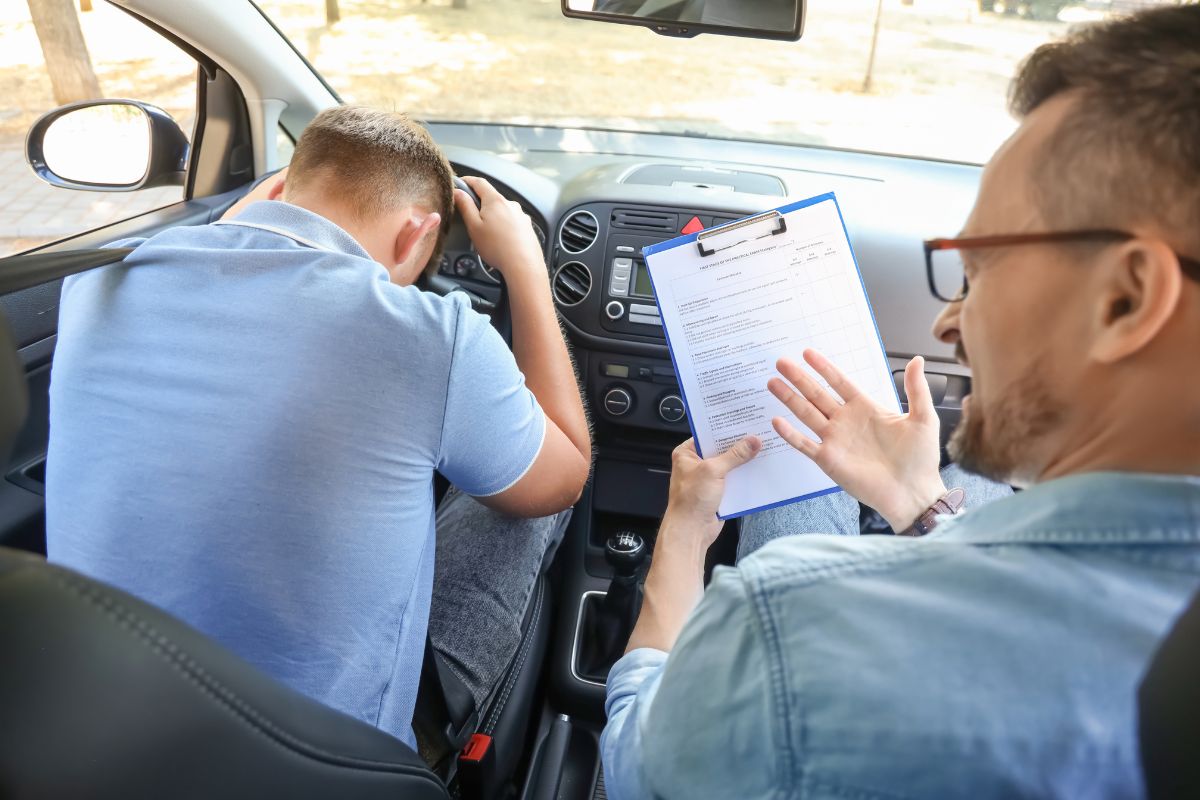
Failing a road test can feel discouraging, but it usually does not mean you are a bad driver. In many cases, students fail because of a few repeated habits: missed shoulder checks, rolling stops, speed changes, weak observation, poor lane positioning, hesitation, or nerves during parking and intersections.
The good news is that these mistakes can be corrected with focused practice. A road test is not about driving perfectly. It is about showing that you can drive safely, make good decisions, follow Saskatchewan road rules, and stay aware of what is happening around your vehicle.
SGI advises learners to get plenty of practice in different driving conditions and to practise the way their instructor taught them. If you are getting ready for your test in Regina, this guide explains the most common road test mistakes and how to avoid them before test day.
A shoulder check matters because mirrors do not show every blind spot. Before changing lanes, pulling away from the curb, merging, turning where cyclists or pedestrians may be present, or moving into another lane position, the examiner wants to see that you checked properly.
Common shoulder-check mistakes include:
If this habit is not automatic yet, consider booking extra practice through Wascana Driving School’s rates and services page.
At stop signs, your vehicle should come to a complete stop before proceeding. You should also stop in the correct place, which may be before the stop line, crosswalk, sidewalk, or intersection edge, depending on the location.
Common stop sign problems include:
Students often think speeding is the only problem, but driving too slowly can also show uncertainty or poor traffic judgment.
Common speed mistakes include:
A lane change looks simple, but it tests several skills at once: mirror use, signal timing, shoulder check, speed matching, spacing, and smooth steering.
Students often fail lane changes because they focus only on the gap and forget the full process.
A safe lane change should generally include:
Students often focus only on the traffic light or stop sign and forget to scan the full intersection.
At intersections, you should watch for:
One major mistake is entering an intersection when you cannot clear it. Another is turning without checking the crosswalk or blind spot. These mistakes show the examiner that you are reacting late instead of planning ahead.
Parking and low-speed manoeuvres can make students nervous because they require control, observation, and patience.
Common low-speed errors include:
Right-of-way mistakes are serious because they can create risk. Many students fail because they hesitate when they should go, go when they should wait, or misunderstand who has priority.
Common yielding issues happen at:
Road tests are not only about vehicle control. They are about sharing the road. In Regina, students need to be comfortable watching for pedestrians near schools, downtown streets, residential areas, shopping centres, parks, and busier crossings.
Students may lose marks when they:
Some students know the rules but become overly cautious during the test. They stop when they do not need to, wait too long at clear intersections, drive well below the speed limit, or hesitate during lane changes.
This can create confusion for other drivers. Safe driving should be cautious, but it should also be confident and predictable.
Signs of overthinking include:
Nerves are normal. Many strong students feel anxious on test day. The problem is when nerves interrupt normal driving habits.
Nervous students may:
A student who only practises the same route at the same time of day may feel confident until something changes. Road tests can include different traffic levels, weather, lane types, school zones, parked cars, pedestrians, and intersections.
SGI recommends practising in a variety of driving conditions before the road test. (SGI) That means students should experience more than empty residential streets.
Good practice should include:
The more variety you practise, the more comfortable you become.
Your test vehicle should feel familiar. You should know how to adjust mirrors, use signals, turn on lights, use the defroster, control wipers, and position the vehicle smoothly.
Before test day, make sure the vehicle is clean, safe, and ready. Practise in the same vehicle if possible so you are comfortable with steering, braking, acceleration, blind spots, and vehicle size.
Do not wait until the test to discover that the mirrors feel different or the brake pedal is more sensitive than expected.
You can also use Wascana’s road test booking page and practice quiz page as part of your preparation.
A road test is easier when safe habits feel natural. If you are preparing for your Class 5 road test in Regina, Wascana Driving School can help you practise the skills that matter most: observation, control, lane changes, intersections, parking, and confidence.
Review Wascana’s rates and services, check the road test booking page, or contact Wascana Driving School to plan your next lesson.
Common reasons include missed shoulder checks, rolling stops, speeding, poor observation, weak lane changes, and nervous decision-making. The exact result depends on the test situation and safety concerns observed by the examiner.
It depends on the mistake. A small mistake may not automatically fail you, but a dangerous action or repeated safety issue can. The best response after any mistake is to stay calm and continue driving safely.
Practise in different driving situations, review your weak areas with an instructor, arrive early, and focus on safe habits instead of trying to be perfect.
A brush-up lesson can help if you are unsure about shoulder checks, lane changes, parking, intersections, school zones, or test-day confidence.